
Want more patients for your dental practice in 2026? PPC for dentists puts you directly in front of people actively searching for services like emergency care, dental implants, cosmetic dentistry, and Invisalign, right when they’re ready to book.
But clicks alone don’t grow your practice. Real results come from a smart system: targeted keywords, precise local geo settings, high-converting service-specific landing pages, and clear tracking of calls, forms, and appointments.
With the right strategy, like the ones built by Elite Information Tech, you can stop wasting ad spend and start generating consistent, predictable patient growth. This guide shows you how to turn every click into a real opportunity.
- The 5-Step Dental PPC Playbook to Drive Consistent Patient Growth
- What Does Dental PPC Cost in 2026?
- PPC vs SEO for Dentists: Which Strategy Works Best for You?
- Should You Manage Dental PPC Yourself or Hire an Agency?
- Common Questions About PPC for Dentists, Answered
The 5-Step Dental PPC Playbook to Drive Consistent Patient Growth
Use this proven five-step system to create PPC campaigns that not only attract new patient inquiries but also turn them into booked appointments:
- Set Clear Goals and Define Your ROI Baseline
- Choose The Right Mix of PPC Campaign Types
- Target High-Intent Keywords with Precision
- Create Compelling Ads and High-Converting Landing Pages
- Track Performance and Train Your Front Desk to Convert Leads into Patients
1. Set Clear Goals and Define Your ROI Baseline
Before choosing keywords or writing ads, define what success looks like for your practice. A clear direction ensures every click works toward real growth.
- Choose one primary goal: Focus on what matters most, whether it is increasing new patient inquiries, boosting appointment bookings, or attracting high-value cases like implants or cosmetic treatments.
- Align your goal with a specific service: This helps you estimate ROI more accurately. A campaign for routine cleanings will require a very different strategy than one focused on premium procedures like implants.
- Set your budget expectations: Decide how much you can afford per lead. Establish targets for cost per lead and cost per booked appointment, then use these benchmarks to guide your bidding strategy and overall budget.
2. Choose The Right Mix of PPC Campaign Types
Most dentists begin with Google Search ads, and for good reason. They capture patients with clear intent. But in 2026, the strongest results come from combining the right campaign types based on your goals and local competition.
Here’s a simple way to approach it:
| Campaign Type | Where Ads Show | Best For | Example Use Case |
|---|---|---|---|
| Search Ads (Google/Bing) | Search results pages | Capture high-intent searches for specific dental services | “Emergency dentist near me,” “Invisalign cost.” |
| Local Services Ads (LSAs) | Google local lead unit (typically above search results) | Generate leads with trust signals, calls, or messages | Compete for “dentist near me” leads using verified profiles and patient reviews |
| Performance Max (PMax) | Google inventory across Search, Maps, Display, YouTube, and Gmail | Expand reach with campaigns that have strong tracking in place | Promote multiple dental services to drive calls or form submissions |
| Google Display Network (GDN) for Prospecting | Websites and apps within Google’s Display Network | Build awareness in competitive markets | Stay visible to local patients who are researching dental care options |
| Google Remarketing | Display Network and YouTube | Re-engage visitors who previously showed interest but didn’t convert | Remind site visitors to schedule an appointment after they view the implants page |
| Paid Social | Social feeds and stories on Meta, Instagram, or other social platforms | Build awareness and promote offers, though audience intent may be lower | Promote new-patient specials or teeth whitening promotions |
Audience targeting strengthens your campaigns by ensuring your ads reach the people most likely to book, while helping you allocate your budget more effectively. No matter where you run PPC, make full use of tools like Google Analytics Audience Builder and Google Ads audience segments. These allow you to move beyond broad targeting and focus on high-intent users, so your ads appear in front of the right people at the right time instead of being wasted on irrelevant clicks.
3. Target High-Intent Keywords with Precision

This is where you control waste. In competitive markets, showing up for the wrong searches can quickly drain your budget. A smarter keyword strategy ensures every click has real potential.
Start with keyword research
Begin by understanding how potential patients actually search for your services. Focus on one core service you want to grow, such as dental implants, and build keyword themes around real search behavior.
- Price or financing: “dental implants cost,” “implant financing.”
- Location and intent: “dental implants near me,” “implant dentist in [city].”
- Consultation-focused: “implant consultation,” “best implant dentist near me.”
Grouping keywords this way helps you avoid mixing different user intents, which often leads to wasted clicks and low-quality inquiries.
Use the right tools to refine your list
Streamline your process with tools like Google Ads Keyword Planner:
- Start with a seed keyword: Enter a term like “dental implants” to generate related searches, including cost, local intent, and consultation queries.
- Evaluate volume and competition: Use Keyword Planner to identify which terms have strong search demand and match your goals, especially high-intent queries that indicate someone is ready to book.
- Organize by intent: Build focused ad groups around specific keyword themes, such as consultation-based searches like “implant consultation” or “implant dentist appointment.”
This structured approach makes it easier to create relevant ads and direct users to the right landing pages, improving click-through rates and bringing in more qualified leads.
Target Local Traffic Effectively
Local targeting is essential for dental PPC because most patients choose a provider nearby. A well-defined geographic strategy helps you avoid wasted spend and focus only on people who can realistically visit your practice.
The goal is simple: make sure your ads reach patients who are close enough and ready to book.
Here’s how to do it in Google Ads:
- Define your service area clearly: Target specific cities, ZIP codes, or set a radius around your clinic to reach the right audience.
- Use advanced location settings: Prioritize people who are physically present in your selected area, not just those showing interest in it.
- Exclude irrelevant locations: Remove nearby towns or regions you do not serve to prevent unqualified clicks.
- Set a strategic ad schedule: Run call-focused ads only during hours when your front desk is available to respond.
- Segment by service radius: Create separate campaigns or ad groups based on how far patients are willing to travel. For example, keep a tight radius for “emergency dentist” searches, and a wider one for high-value treatments like implants or cosmetic dentistry.
When done right, local targeting ensures your budget is spent on clicks that are far more likely to turn into actual patients.
Add negative keyword targeting
Not every click is a valuable lead. To avoid wasting ad spend, create a negative keyword list that prevents your ads from showing for searches that won’t convert. This is especially important for terms linked to free services, low-cost searches, jobs, courses, DIY solutions, or insurance types your practice doesn’t accept.
A simple test: ask yourself, “Would someone searching this realistically become a paying patient?” If the answer is no, or if it consistently generates clicks without appointments, it belongs on your negative list.
Begin with a set of obvious mismatches, then dive into the Google Ads search terms report to uncover the exact phrases people typed before clicking your ads. Organize negatives by theme to keep campaigns clean and efficient.
During the first month, review search terms weekly, then move to a monthly check-in. Apply negatives at the appropriate level – campaign-level for broad exclusions or ad group-level for service-specific filtering.
Finally, store your negative keywords in Google Ads’ Shared Library. This lets you apply the list across campaigns, maintain consistency, and scale your PPC efforts without wasting budget on irrelevant traffic.
4. Create Compelling Ads and High-Converting Landing Pages
Once your targeting is in place, the next step is turning clicks into real patient inquiries.
Create custom landing pages
Build customized landing pages for each PPC ad. These are the pages users land on after clicking your ad, so they need to match the message and intent of that specific campaign.
Your ads and landing pages should stay aligned. If your ad promotes cosmetic dentistry, the landing page should clearly focus on your cosmetic services rather than general treatments. This consistency reassures visitors that they are in the right place.
Make sure each landing page includes clear calls to action that guide potential patients to take the next step, whether that is calling your clinic, filling out a form, or booking an appointment.
Well-designed, relevant landing pages keep visitors engaged, build trust, and reduce the likelihood that they will leave without contacting you.
Show your USPs
In a competitive local market, your PPC ads need a clear reason for patients to choose your practice over others nearby. Strong, visible differentiators help your ads stand out and attract more qualified calls and appointment requests.
Your unique selling points, or USPs, are what set your practice apart. These can include the quality of your care and results, the range of services you offer, or your areas of specialization. Certifications, professional achievements, and industry recognitions also build credibility.
You can further strengthen trust by highlighting patient reviews and testimonials, along with the insurance plans you accept. When clearly communicated, these elements make it easier for potential patients to choose your practice with confidence.
Optimize your ads for phone calls
If you want faster conversions, focus on turning clicks into calls. For dental practices, a phone call is often the shortest path from interest to a booked appointment.
Google charges the same for a call as it does for a standard click, so it makes sense to prioritize call-driven campaigns where patients can connect with you instantly.
Make your phone number highly visible in every ad and schedule your campaigns to run only during office hours. This ensures every call is answered by your team, not missed or sent to voicemail.
When done right, call-optimized ads capture high-intent patients at the perfect moment and give your front desk the opportunity to convert them into confirmed appointments.
Use ad assets to stand out and drive more clicks
Standard PPC ads have limited space, which makes it harder to showcase everything your practice offers. Ad assets solve this by giving you extra room to highlight important details and guide patients toward the right action.
For example, location assets can display your address, phone number, and business hours directly in the ad, making it easier for nearby patients to find and contact you. Sitelink assets let you add multiple links, so users can jump straight to specific services like implants, cosmetic dentistry, or emergency care instead of landing on a single page.
When used effectively, these assets make your ads more visible, more informative, and more clickable, helping you attract high-intent patients and get more value from every impression.
5. Track Performance and Train Your Front Desk to Convert Leads into Patients
A lead only matters if it turns into a booked appointment. To make your PPC efforts truly effective, focus on converting interest into action.
Analyze PPC results
Consistent analysis is what separates average campaigns from high-performing ones. Use tools like Google Analytics to uncover insights that help you refine and improve your strategy over time.
For dental practices, the most important metrics to track include CPC, CPL, conversion rate, cost per booked appointment, and overall ROI. These numbers reveal whether your campaigns are attracting the right patients and delivering real value.
Use this data to continuously test and improve. Identify which ads and keywords are driving qualified leads and which ones are wasting your budget. Then refine your approach by updating ad copy, adjusting keyword targeting, and adding negative keywords where needed.
This ongoing optimization helps you create stronger ads, attract better prospects, and consistently increase both clicks and conversions.
Train your front desk team
Your front desk or scheduling team is the final and most critical step in your PPC funnel. Even the best campaigns can fail if incoming leads are not handled properly. With the right training, your team can turn paid inquiries into confirmed appointments.
Start by ensuring they respond quickly to calls and form submissions, since paid leads are highly time-sensitive. Train them to confirm the patient’s needs, verify contact details like phone number and email, and guide the conversation toward booking. Offering the next available appointment creates urgency and increases the chances of conversion.
They should also clearly explain your location, directions, and what the patient needs to bring, so there is no confusion before the visit. Just as importantly, set up a process to follow up on missed calls and voicemails, as these are often high-intent leads that simply need a second touch.
These simple but structured steps protect your ad spend and ensure every opportunity is handled properly. When your front desk is aligned with your PPC strategy, you turn more clicks into booked patients and gain a clearer, more reliable return on your investment.
What Does Dental PPC Cost in 2026?

Dental PPC costs can vary widely in 2026, but understanding the benchmarks helps you plan smarter and scale with confidence.
On average, cost per click can range from $0.01 to $1, while monthly ad spend typically falls between $100 and $100,000. The exact cost depends on factors like your location, level of competition, the services you promote, and how aggressively you want to grow.
If you choose to work with an agency or freelancer, PPC management fees usually range from $100 to $5,000 per month. For a more strategic approach, using a revenue-based budgeting method can help you align your ad spend with actual growth goals.
Industry benchmarks also provide useful context. In healthcare, the average cost per lead is around $98. Cost per click typically ranges from $1.50 to $3.50 for basic services, $3.50 to $6.00 for specialized treatments, and $6 or more for high-value procedures. Dental PPC campaigns also see an average conversion rate of about 10.40 percent, making them one of the more effective channels in the healthcare space.
The key takeaway is that success is not about spending more, but about spending strategically to attract high-intent patients and convert them efficiently.
Typical monthly Ad spend range by practice goal
Dental PPC costs vary based on competition, services, and growth goals, so start with clear budget benchmarks tied to your objectives.
Use these ranges as a baseline, then refine them using ROI calculations and the value of a booked patient to build a sustainable and profitable PPC strategy.
PPC vs SEO for Dentists: Which Strategy Works Best for You?
Most dental practices see the best results when they combine PPC and SEO. PPC helps you appear instantly for high-intent searches and promotes specific services when patients are ready to book.
SEO, on the other hand, builds long-term visibility and trust, reducing your reliance on paid ads over time. Together, they create a balanced strategy that drives both immediate leads and sustainable growth.
| Factor | PPC | SEO |
|---|---|---|
| Speed to results | Fast | Slower |
| Long-term value | Immediate results, but stops when spending stops | Compounds over time, builds lasting visibility |
| Ongoing cost | Pay per click or lead | Invest time, content, and resources |
| Targeting precision | Very high | Medium to high |
PPC can deliver results quickly, but SEO builds a steady and sustainable flow of patients over time.
Dental practices often choose to work with a PPC agency when they want higher-quality leads, clearer ROI tracking, stronger local targeting, and less hands-on campaign management.
If you are deciding between hiring an agency or managing Google Ads yourself, the right choice comes down to your time, in-house expertise, and how quickly you want to scale your practice.
Should You Manage Dental PPC Yourself or Hire an Agency?
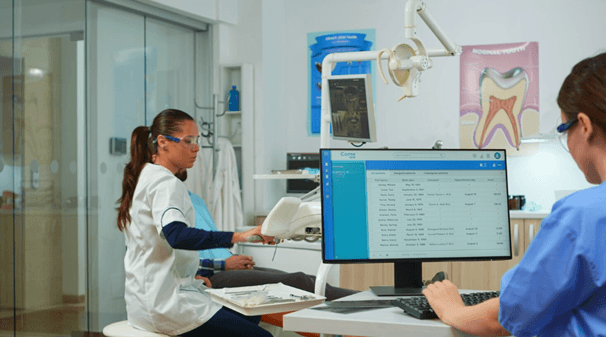
DIY can work if you have the time to learn and actively manage your dental PPC campaigns. However, it often requires ongoing testing, tracking, and optimization to see consistent results.
An agency, on the other hand, helps you focus your budget on what drives real growth, such as precise targeting, accurate conversion tracking, and high-performing landing pages, so you are not handling every detail yourself.
If you decide to hire an agency, make sure you choose one that truly understands dental PPC. The right partner will be transparent, data-driven, and focused on real patient growth, not just clicks.
You can quickly evaluate their expertise by asking a few key questions. How do they track calls and actual booked appointments, not just traffic? What steps do they take to prevent wasted spend, such as using negative keywords, precise geo targeting, and ad scheduling? What metrics are included in their reporting, and do they go beyond basics to track CPL, conversion rate, booked appointment rate, and ROI? Finally, how do they ensure compliance with healthcare advertising guidelines?
The answers to these questions will help you identify an agency that is focused on outcomes and capable of delivering consistent, measurable results.
Common Questions About PPC for Dentists, Answered
1. What is PPC for dentists?
PPC, or pay-per-click advertising, for dentists is a way to appear at the top of online search results when potential patients are looking for dental services. You choose the keywords that trigger your ads and only pay when someone clicks. This makes it a highly targeted way to reach people who are actively searching for the services your practice offers.
2. How does PPC advertising work for a dental practice?
PPC advertising helps your dental practice reach people who are actively searching for the services you offer, while only charging you when someone takes action, like clicking your ad or calling your office.
Here’s how it works:
You set up a campaign focused on specific services, such as emergency care, implants, or Invisalign, and define the geographic area you serve. You create ads that either drive clicks to a relevant landing page or encourage phone calls. Finally, you track results – calls, form submissions, and booked appointments – and use that data to optimize bids, keywords, and ad copy over time for better performance.
3. What are the benefits of using PPC for a dental office?
The biggest advantage of PPC for dentists is that you only pay when someone clicks your ad. If no one clicks, you don’t spend a dime, making it a cost-effective way to reach potential patients.
Another key benefit is speed. Unlike other marketing strategies that take time to show results, PPC can start driving qualified traffic to your website immediately after launch. If your goal is to quickly attract more patients and increase appointments, PPC is one of the fastest and most targeted ways to grow your dental practice.
4. How much does PPC cost for dentists?
Dental PPC costs can vary, but the average cost per click ranges from $0.01 to $1, with many practices spending between $100 and $100,000 per month in 2026.
Where your practice falls in this range depends on several factors, including your location, local competition, the services you advertise, the precision of your targeting, and how effectively your ads and landing pages convert clicks into patients.
5. How can I measure the success of a dental PPC campaign?<stron
The success of a dental PPC campaign is best measured by results that connect directly to booked patients. Key metrics include:
CPC and CPL: These show what you’re paying for clicks and leads, helping you evaluate whether your spend is efficient for your market and the services you promote.
Conversion rate: This measures how often clicks turn into real patient inquiries, like calls or form submissions, indicating whether your ads and landing pages match what searchers are looking for.
Booked appointment rate: This tracks how many leads become scheduled appointments, revealing whether you’re attracting the right patients and converting them effectively at the front desk.
ROI: This compares revenue from new patients to your PPC spend, confirming whether the campaign drives profitable growth rather than just clicks.
It’s also important to review the factors driving performance, including geographic and audience targeting, bidding strategy, keyword quality, negative keywords, and sending traffic to dedicated landing pages. These levers help you optimize costs, improve lead quality, and increase booked appointments.
6. What are the key aspects of an effective dentist PPC campaign?
A strong dental PPC campaign focuses on attracting high-quality leads and converting them into booked patients. Key elements include:
Campaign structure by service: Create separate campaigns or ad groups for each core service so keywords, ads, budgets, and landing pages align with what patients are searching for. This improves lead quality and ROI.
Local targeting and schedule alignment: Limit ads to the areas you serve and run call-focused campaigns during office hours, ensuring you only pay for leads you can realistically convert.
Dedicated landing pages with clear CTAs: Send each ad to a service-specific page with one clear next step. This keeps visitors engaged and reduces bounce rates.
Call and lead tracking: Track calls and form submissions back to the campaign and keyword that generated them, so you know what drives real inquiries.
Ongoing optimization: Regularly review search terms and performance data to add negative keywords, refine messaging, and improve landing pages. This reduces wasted spend and increases booked appointments over time.
Get help with PPC for dentists
When PPC campaigns are built around the right services, locations, and conversion goals, your dental practice can generate more qualified patient calls and appointment requests quickly. Elite Information Tech helps dental practices manage PPC with strategy, tracking, custom landing pages, and ongoing optimization – all focused on booked-patient ROI.
Our team of award-winning PPC specialists takes the time to understand your practice and implement campaigns designed to achieve your business goals. We know how to manage your PPC campaigns for maximum return on investment. In fact, our campaigns have consistently delivered performance lifts of 25 percent and driven millions in PPC revenue.
If you want to see how PPC advertising can grow your dental practice, contact us today to learn more and get a free quote.