Key takeaways
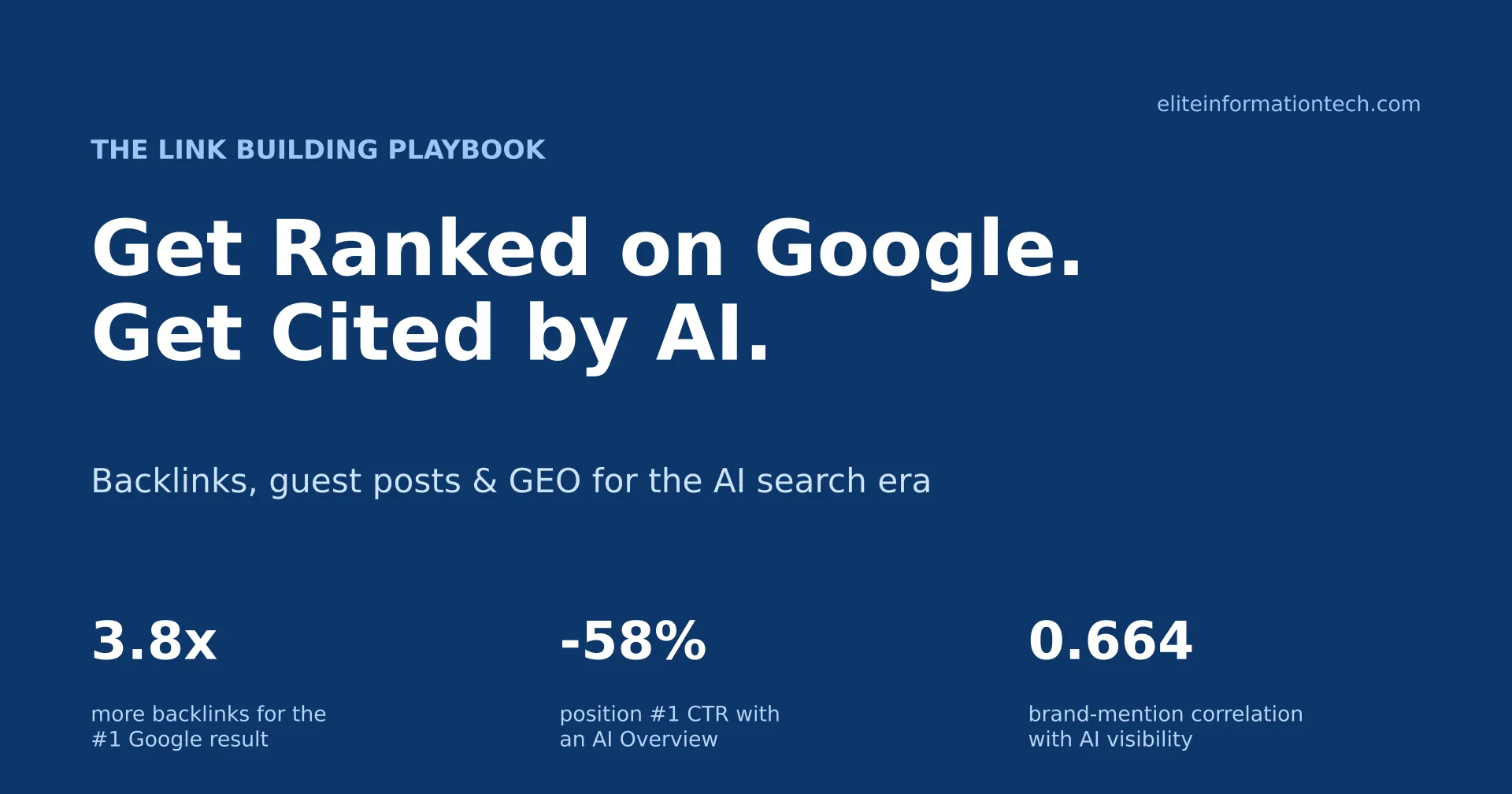
- Google's AI Overviews appeared on up to 1 in 4 tracked keywords in 2025, and they're spreading into buying searches.
- When they appear, clicks to websites drop sharply, so you now need to rank and be cited.
- Both come from the same place: editorial backlinks and brand mentions on sites people trust.
- The tactics that work are digital PR, genuine guest posting, broken link building and local partnerships. Cheap link packages don't.
Try this before you read on. Open ChatGPT and type: "Who is the best [your service] company in [your city]?" Then do the same search on Google and look at the AI Overview at the top.
Is your business named? If it isn't, the reason is rarely your website. AI tools and Google build their answers from what the rest of the internet says about you: the links pointing to your site, the articles that mention your name, the reviews and forums where your brand comes up. That is link building, and in the AI era it matters more, not less.
This guide shows you how it works now, using numbers from the largest independent studies we could find. No fluff, no "secret hacks". Just what the data says, what we'd do in your position, and a 90-day plan at the end. Every statistic is listed with its source at the bottom of the page.
How search changed (and why it matters for your links)
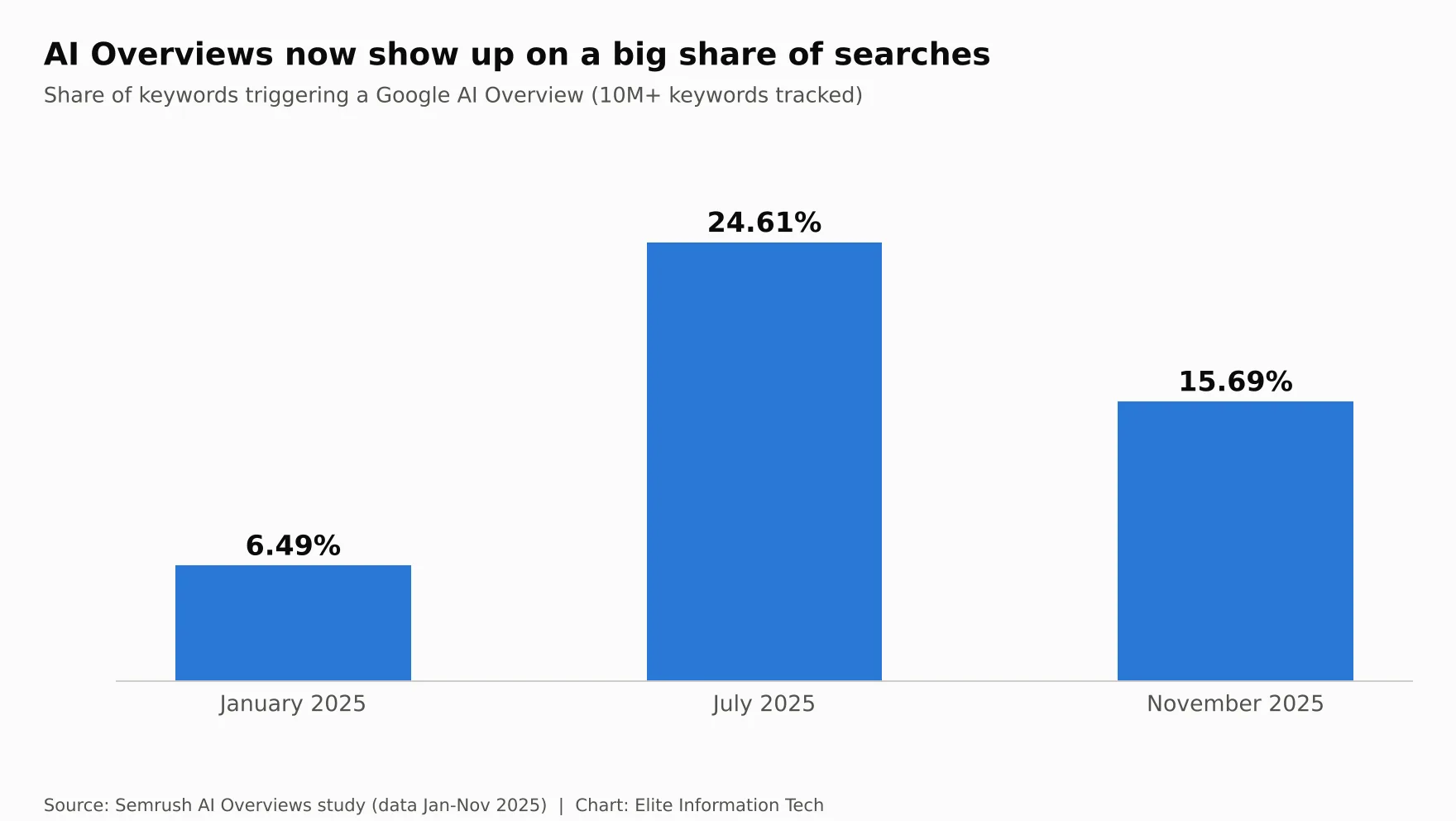
Semrush has tracked more than 10 million keywords to see how often Google shows an AI Overview. In January 2025 it was 6.49% of keywords. By July it peaked at 24.61%, and it settled at 15.69% in November.
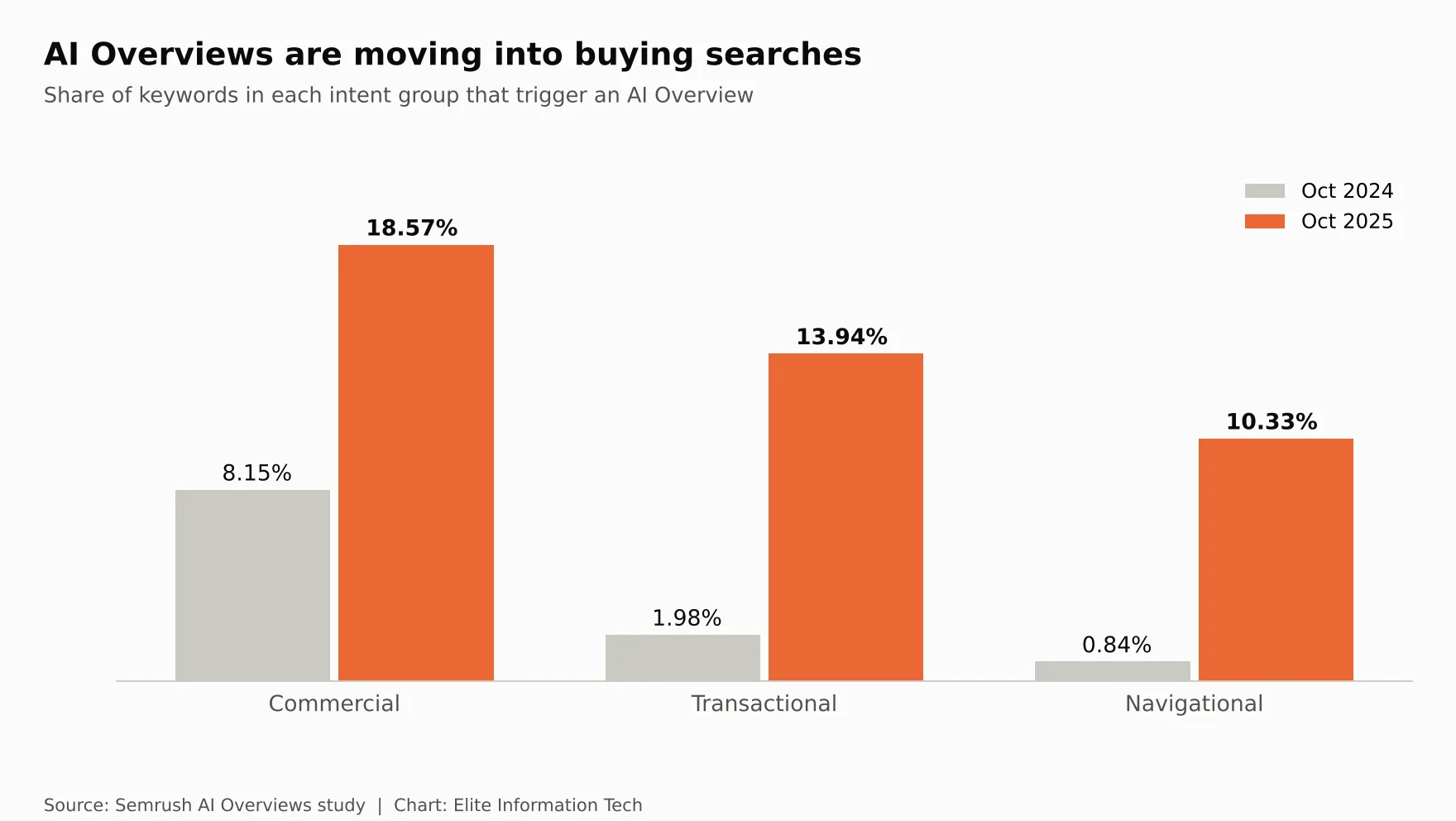
The bigger story is where they're showing up. At first, AI Overviews were almost all informational. Now they're moving into searches where people are ready to compare and buy:
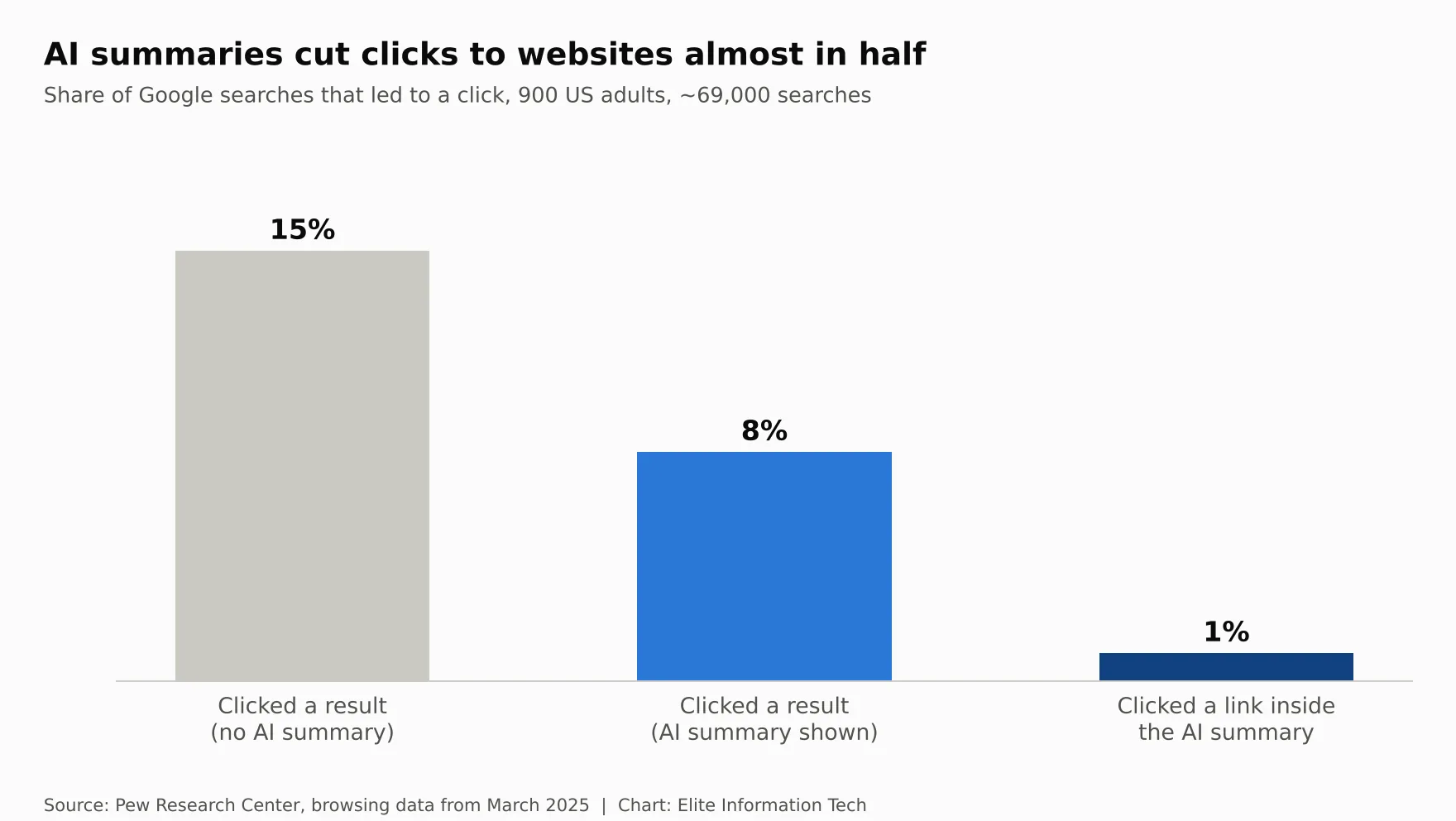
Now look at what happens to clicks. Pew Research Center tracked the real browsing of 900 U.S. adults across roughly 69,000 Google searches in March 2025. With an AI summary on the page, people clicked a regular result on 8% of visits. Without one, 15%. Only 1% clicked a link inside the summary.
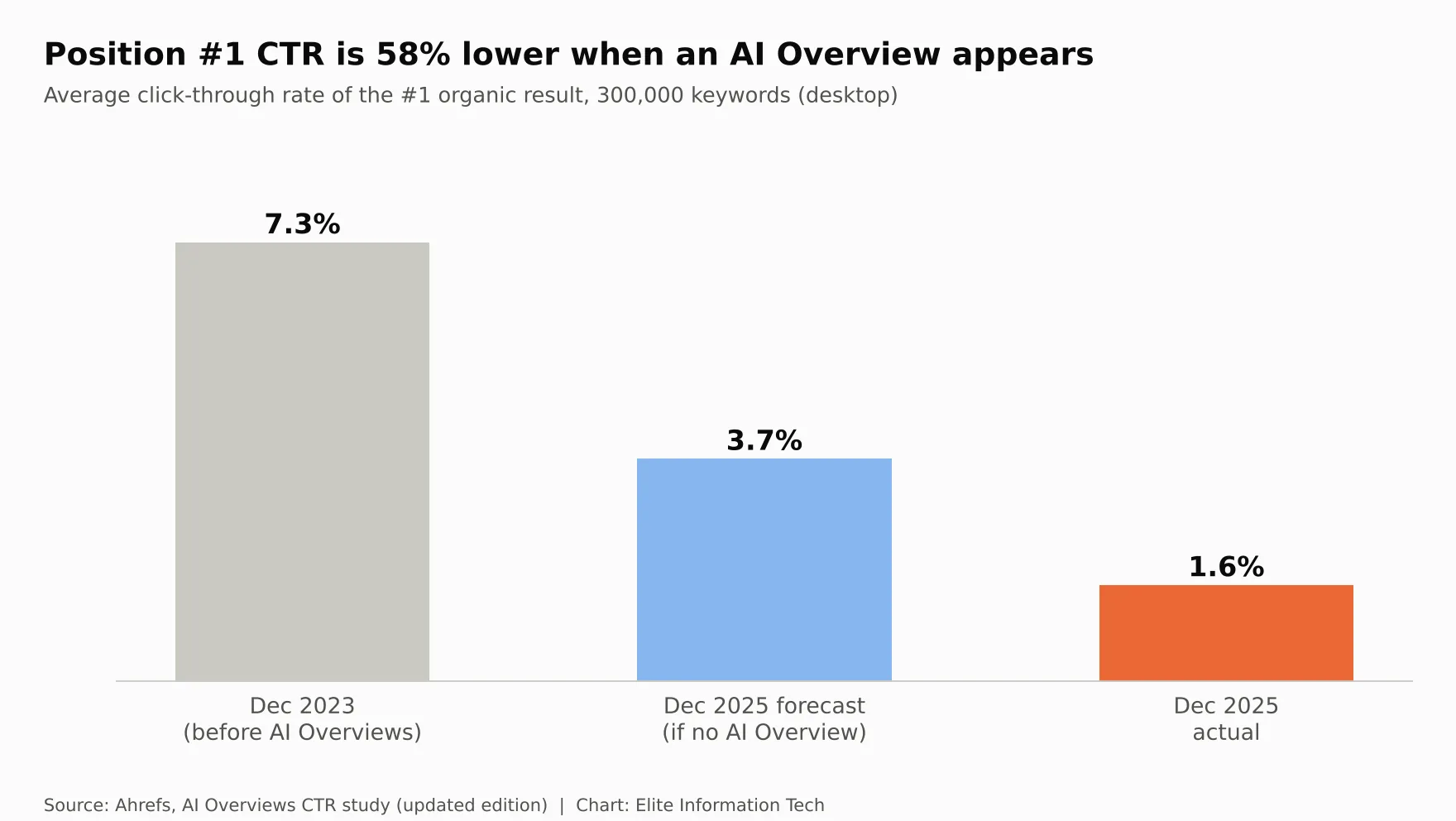
Ahrefs measured the same effect from the publisher side. Using December 2025 Search Console data on 150,000 AI Overview keywords, position-one CTR dropped from 7.3% to 1.6%, where their model expected about 3.7% without an Overview. That's 58% lower, up from the 34.5% they found in their first study.
Myth: "Is SEO dead? Nobody clicks anymore."
Reality: People still search, compare and buy. What changed is the scoreboard. You now win in two places: the rankings (for searches that still get clicks) and the AI answer (where buyers form their shortlist). Both run on authority from other websites, which is why link building sits on every credible list of the latest SEO trends.
How many backlinks do I need to rank?
Short answer: more than the pages you're trying to beat, from better sources. There's no universal number, but the data gives you a reliable way to find yours.
Backlinko's analysis of 11.8 million Google results (with data from Ahrefs) found the top result had, on average, 3.8 times more backlinks than the results below it, and roughly three times more referring domains. Ahrefs' own study of about 14 billion pages found 96.55% get no traffic from Google at all. Of roughly 20 million pages with zero referring domains, only 2,997 got more than 1,000 search visits a month.
Ahrefs' Keyword Difficulty score is a handy shortcut, because it's calculated from the links of the top 10 pages. Per Ahrefs, a KD near 0–5 means the top pages have barely any backlinks, around 50 means a couple of hundred, and 90+ means thousands.
- Pick your most valuable keyword, the one that brings paying customers.
- Note the top five organic results on Google.
- Run each URL through Ahrefs, Semrush or Moz (free tiers are fine) and write down its referring domains.
- Take the middle value. That's your 12-month target. Subtract what you have and divide by 12 for your monthly goal.
- Referring domains vs backlinks: A backlink is one link; a referring domain is one website. Fifty links from one blogroll still count as one site. Judge progress by referring domains.
- Link velocity: Your competitors are earning links every month too. Link velocity SEO is about pace: if they add 30 sites a month and you add 3, the gap grows.
- Editorial backlinks: Links placed by a writer inside a real article are what move rankings. Directory and profile links rarely make the difference.
How important are backlinks for SEO when AI picks the answer?
Ahrefs studied 75,000 brands to see which signals line up with being mentioned in Google's AI Overviews. The result surprised a lot of SEOs:
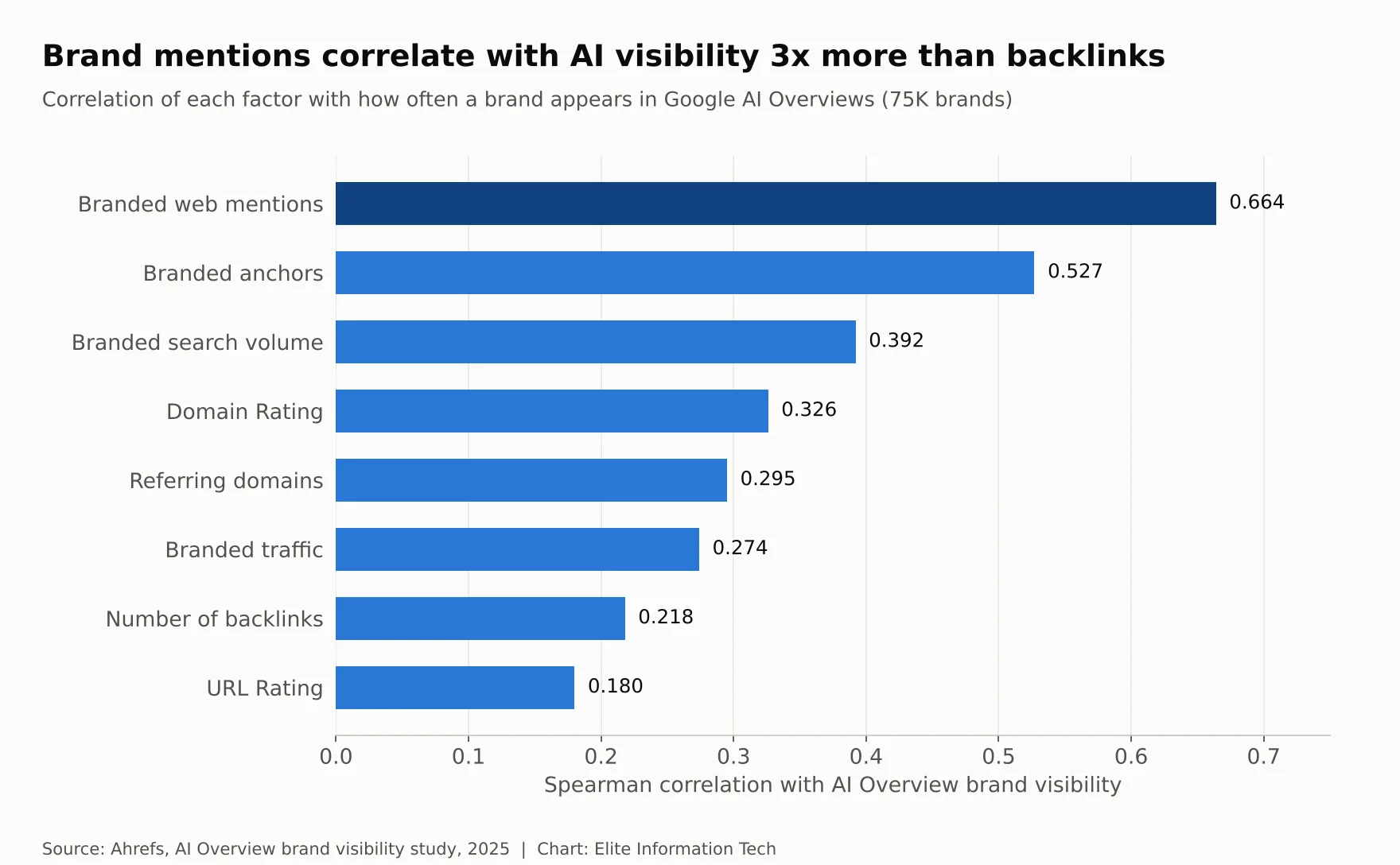
Branded web mentions correlated at 0.664 with AI visibility. Raw backlink count: 0.218. For AI, being talked about counts for more than piling up links.
It's a correlation, not proof of cause, and Ahrefs says so. But it fits how language models work: they learn about a business from the sentences written about it. A line like "Sharma Dental fitted my implant in one visit" on a trusted site probably tells a model more than a link in a footer.
Most SEOs see it the same way. In Editorial.Link's survey of 518 SEO professionals, 73.2% said links influence visibility in AI search, and 80.9% said unlinked brand mentions affect rankings.
The AI ranking factors worth your time
- Brand visibility in AI search: get mentioned on the sites models trust in your field, such as trade publications, review platforms, forums and news sites.
- What is branded SEO? It's growing and owning searches for your own name. Branded search volume correlated at 0.392 in the Ahrefs data.
- Authority still counts: Domain Rating (0.326) and referring domains (0.295) remain part of the picture.
- AI Overviews on branded searches: Google your company name today. If the AI summary is thin or wrong, more accurate third-party coverage is the fix.
The playbook: 6 link building strategies that work now
In the Editorial.Link survey, 48.6% of SEOs said digital PR is the most effective tactic right now. Here are the best link building strategies we use, with honest notes on effort and risk.
1. Digital PR built on your own data
Best for: brands with data or a story · Effort: high · Link quality: excellent
What is digital PR? You create something worth reporting, such as a survey, a data study, a calculator or a ranking, then pitch it to journalists and bloggers so they cite and link to you. These are the editorial, brand-name-in-the-sentence links that help with both Google and AI.
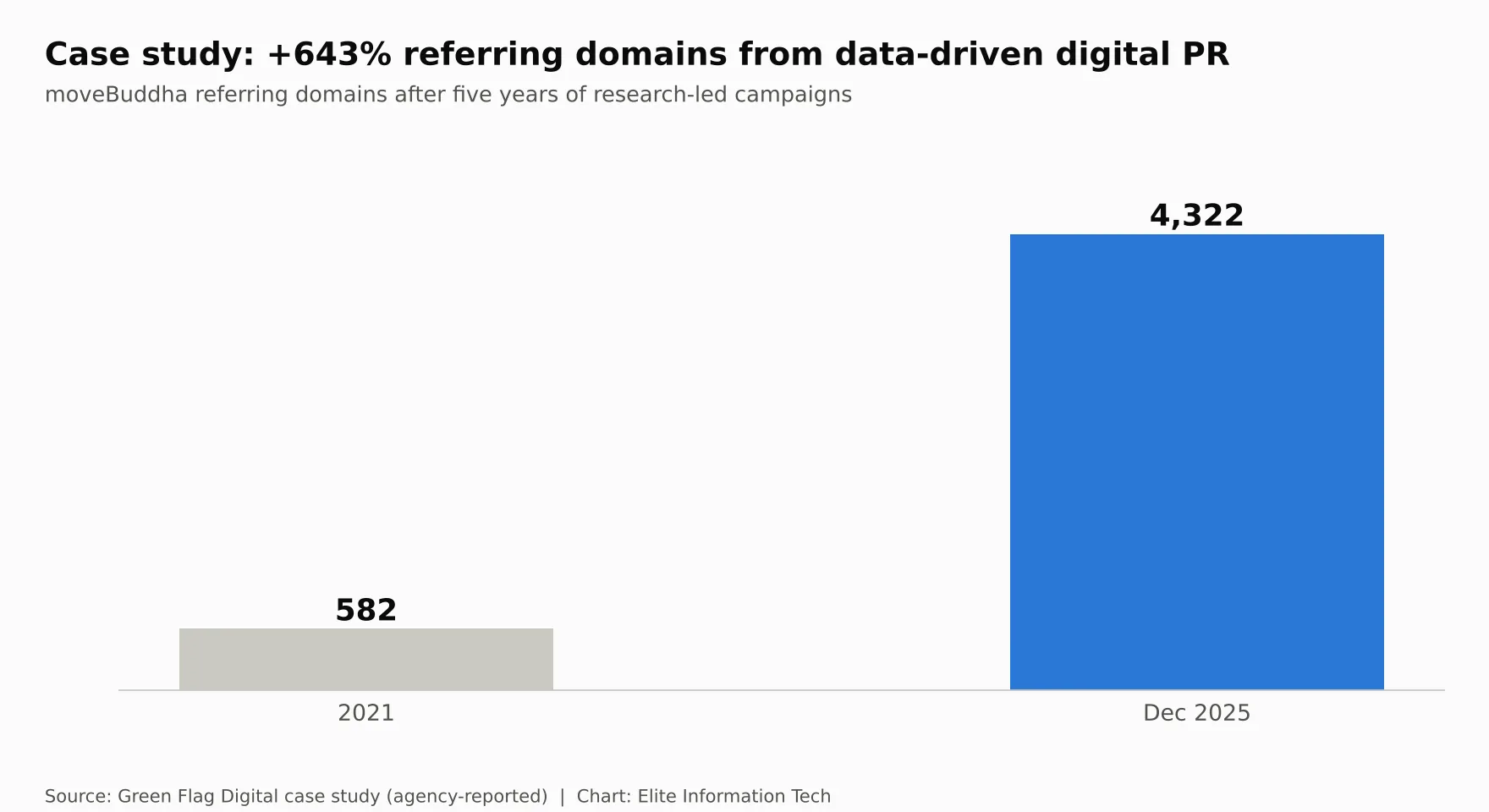
moveBuddha, a moving-cost marketplace, ran research-led PR campaigns with the agency Green Flag Digital from 2021 to December 2025. They turned the data behind their moving calculator into stories like an annual Migration Report and a forecast of America's most populated cities in 2100.
- Referring domains up 643%, against roughly 250% for competitors.
- The Migration Report alone earned 185+ links, including Business Insider and Southern Living.
- Branded search up 704%; the brand moved from third to first in share of voice.
- Coverage in The New York Times, Forbes, CNBC Make It, Bloomberg and CBS News.
Figures as reported by Green Flag Digital.
Your version: pricing trends from your quotes, a survey of 200 customers, regional comparisons from your sales data. One honest study, updated every year, keeps earning links for years.
2. Guest posting that editors actually want
Best for: B2B, services, SaaS · Effort: medium · Link quality: good to excellent
Google's link spam policy names "links with optimized anchor text in articles, guest posts, or press releases distributed on other sites" as spam. Read that carefully: the problem is the keyword-stuffed link, not the guest post. Real expert articles on relevant sites are still one of the most reliable ways to earn links and mentions.
Our guest blog posting guide
- Choose sites your buyers read, not sites with the highest score.
- Check organic traffic. A strong authority score with no traffic usually means a link farm.
- Pitch a sharp angle ("3 pricing mistakes we see in clinic websites"), not "can I write for you?"
- Add what only you know: numbers from your work, real examples, screenshots.
- Use your brand name as anchor text most of the time.
- Accept nofollow or sponsored tags if required. The brand mention can still help your AI visibility.
A pitch template you can adapt
Subject: Idea for [Site]: 3 pricing mistakes we keep seeing in [industry]
Hi [Name],
I liked your recent piece on [topic], especially the point about [specific detail]. One angle I didn't see covered on your site is [gap]. We've seen it come up in [number] projects this year, and I'd like to write a practical piece on it for your readers, with real examples and numbers.
Rough outline: [point 1], [point 2], [point 3]. Happy to follow your guidelines and edit to your style.
Thanks,
[Your name], [Role] at [Company]
Short, specific and about their readers. Editors get dozens of "I'd love to contribute" emails a week; a clear angle stands out.
How to write a guest post that gets accepted
Read five posts on the site first. Find a topic they haven't covered. Match their length and tone. Back up every point with a number, a quote or an example. Keep promotion to one useful link and a short bio. That's how to guest post on blogs and still be welcome back.
3. Broken link building
Best for: niches with resource pages · Effort: medium · Link quality: good
Sites link to resources that later vanish. A broken link building strategy finds those dead links (Ahrefs' "Broken backlinks" report or Screaming Frog), creates a better version on your site, and lets the editor know. You're solving their problem, which is why it converts better than cold outreach.
Start with your own site, too. Here's how to fix broken links that already have backlinks: 301-redirect each dead URL to the closest live page, update internal links, and bring back any page worth keeping. You recover authority you already earned.
4. Local link building tips
Best for: clinics, trades, restaurants · Effort: low · Link quality: strong locally
- Sponsor a local event, sports team or charity that thanks sponsors online.
- Join the chamber of commerce and trade associations with member listings.
- Co-create a guide with non-competing local businesses ("the best wedding vendors in your city").
- Offer local journalists quick expert comments on news in your field.
- Keep your business name, address and phone identical everywhere they appear.
5. Link building strategies for small businesses
Best for: new or small sites · Effort: steady · Cost: mostly time
If you've ever searched "how to get backlinks for my website" hoping for a shortcut, here's the truth: natural link building strategies are about steady effort, not spend.
- Ask suppliers and partners about their "our clients" or "where to buy" pages.
- Turn one great customer result into a case study a trade blog would publish.
- Answer questions on Reddit and Quora where it's allowed and genuinely helpful.
- Write the best page on the web for one narrow question in your niche, then share it with people who cover that topic.
6. How to build links on Wikipedia (the honest answer)
Best for: research-led brands · Effort: high · Link type: nofollow
Wikipedia is everywhere in AI answers, but its links are nofollow and promotional edits are removed quickly. The only lasting approach is to publish original research good enough for an editor to cite. Never edit articles about your own business.
The link quality filter
- Relevant to your industry or audience
- Real, steady organic traffic
- Named authors and an editor
- Link sits inside the article
- Site links out to genuine sources
- One blog covering casinos, CBD and plumbing
- High authority, almost no traffic
- "Write for us, DA 70, $30"
- Links in footers or sidebars
- Every post links to unrelated sales pages
Nofollow vs dofollow links
A dofollow link is simply a standard link. A nofollow link has rel="nofollow", and Google also recognises rel="sponsored" (paid) and rel="ugc" (user content). Google treats all three as hints. 78.8% of SEOs in the Editorial.Link survey think nofollow links still affect rankings. A natural profile has both, so focus on relevance.
Anchor text best practices
Use your brand name, your URL or natural phrases ("this guide", "their research") for most anchors. Keep exact-match phrases like "best SEO company India" rare. Branded anchors correlated at 0.527 with AI visibility, so they help twice.
Toxic backlinks removal: should you disavow?
Usually not. Google says most sites never need the disavow tool because its systems already ignore most spam. It recommends disavowing only when you have many spammy or artificial links and they've caused, or are likely to cause, a manual action. Bulk-disavowing everything a tool flags as "toxic" can throw away links that were helping.
Do outbound links affect SEO?
Not directly. But citing good sources makes your page more useful and, according to the GEO research below, more likely to be quoted by AI.
What is a good domain authority score?
Domain Authority (Moz) and Domain Rating (Ahrefs) are third-party scores from 1 to 100. Google uses neither. A good score is one that beats the sites you compete against. Local businesses often compete well at 20–40; national finance or SaaS brands usually need 50+. For how to check domain authority, use Moz Link Explorer or Ahrefs' free Website Authority Checker, and compare yourself with the top three results for your keyword.
GEO: how to get cited by Google AI Overviews and ChatGPT
Generative engine optimization (GEO) means making your content easy for AI to find, trust and quote. Researchers from Princeton University and IIT Delhi tested nine content changes on 10,000 queries and published the results at KDD 2024:
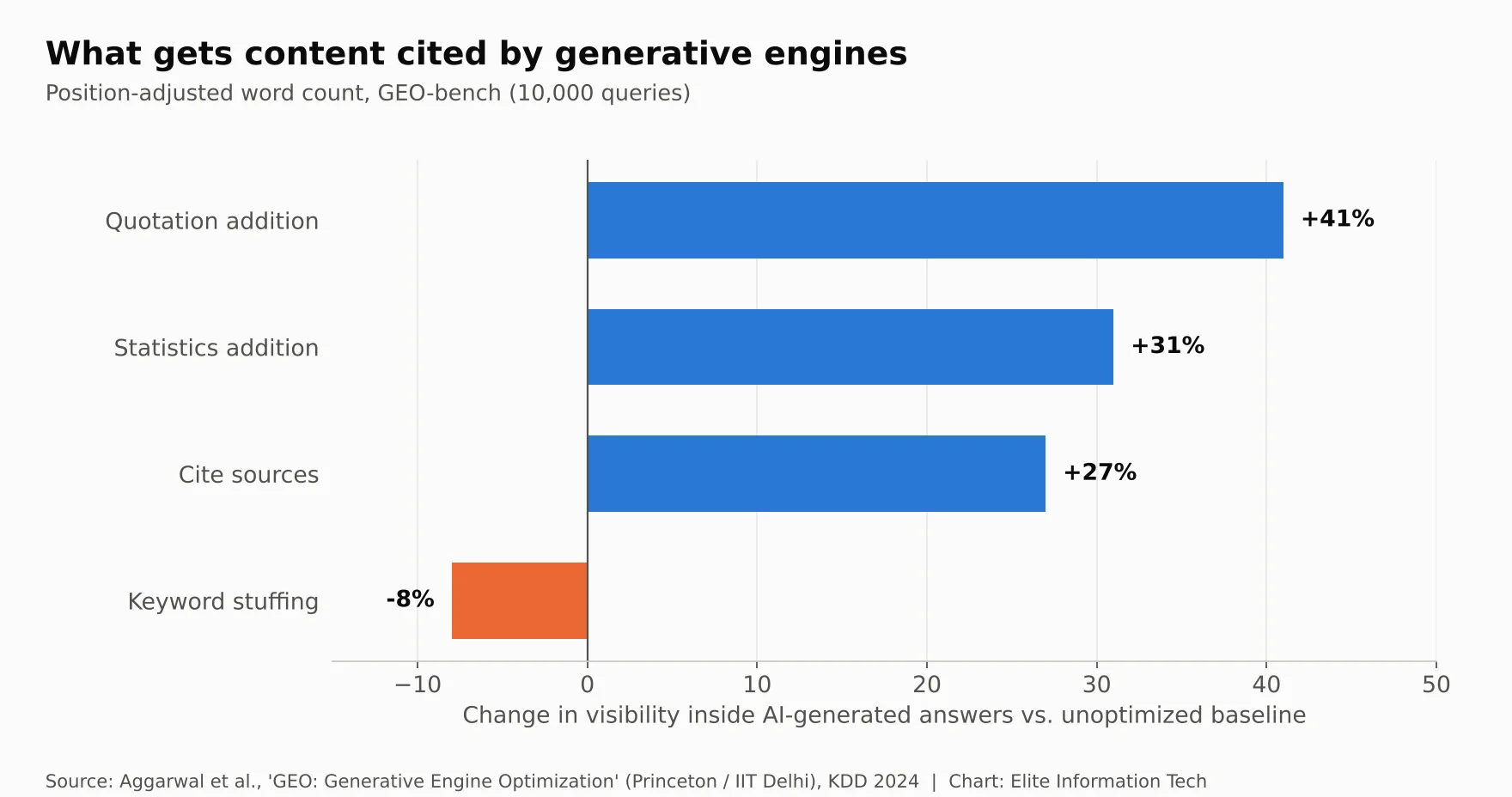
Adding quotations (+41%), statistics (+31%) and sources (+27%) raised visibility in AI answers in their benchmark. Keyword stuffing made it slightly worse. It's lab data, not a guarantee, but the message is clear: write like a good journalist, not a keyword machine.
Why is my website not showing up in AI search results?
- Blocked crawlers. Check robots.txt and your firewall for OAI-SearchBot (ChatGPT search), PerplexityBot and Googlebot. GPTBot and Google-Extended control AI training and Gemini, not AI Overviews. Some CDNs, including Cloudflare on newer setups, block AI crawlers by default.
- Too few mentions. If no trusted site talks about you, AI has nothing to repeat.
- Buried answers. Put a direct one- or two-sentence answer right under each question heading.
- No proof. Pages without numbers or sources give AI nothing to cite.
- Thin coverage. One post on a topic rarely beats a site with a full set of related pages.
How to rank in Google AI Overviews
- Rank in the top organic results first. AI Overviews lean heavily on them.
- Answer the question in the first 40–60 words below a matching heading.
- Use tables, numbered steps and FAQ sections.
- Show a real author with real credentials.
- Refresh important pages and show the "last updated" date.
How to rank in ChatGPT search results
ChatGPT search pulls live web results and cites them. Make sure you're indexed in Bing (submit your sitemap in Bing Webmaster Tools), allow OAI-SearchBot, and earn mentions on the sources ChatGPT likes to cite in your niche: industry publications, review platforms, Reddit discussions and comparison articles.
How to track AI search rankings
Search Console doesn't separate AI Overview traffic, so add a tracker such as Ahrefs Brand Radar or Semrush's AI toolkit. Choose 25–50 prompts your customers really ask and check monthly how often you're cited compared with competitors. In GA4, create a channel for referrals from chatgpt.com, perplexity.ai and gemini.google.com.
Publish the clearest answer to a real question, back it with data and sources, and get trusted sites to talk about it.
- Buying by authority score alone. A high DA with no traffic is a link farm in disguise.
- Pointing every link at the home page. Your service pages are what need to rank for buying searches.
- Using the same keyword anchor over and over. It looks manufactured, because it is.
- Building links to thin pages. Links can't rescue a page that doesn't answer the question better than the competition.
- Stopping after three months. Competitors keep earning links. Link building works like compound interest, and the gains come to people who keep at it.
How much does link building cost?
Source: Editorial.Link survey of 518 SEO professionals.
| Question | What the data says | Source |
|---|---|---|
| How much does SEO cost per month? | Most common retainer $501–$1,000; 68.8% charge $2,000/month or less | Ahrefs poll of 439 SEO providers |
| SEO hourly rates | Most common $75–$100 per hour | Ahrefs poll |
| Where should links point? | 52.7% of SEOs prioritise links to product or service pages | Editorial.Link survey |
The Ahrefs poll is a few years old, so treat those numbers as a floor. More on SEO pricing:
- Guest posting services pricing should track the site's real traffic and editorial standards. "DA 50+ for $25" is a link farm, and Google is built to ignore it.
- Local SEO pricing is usually lower than national SEO: you need fewer links, and much of the work is your Google Business Profile and reviews.
- How much does generative engine optimization cost? GEO is normally part of an SEO program (content restructuring, PR for mentions, crawler access and AI tracking), so it adds to a retainer rather than replacing it.
- Enterprise SEO services for sites with thousands of pages cost far more, because technical and content work scale with size.
How to pick a link building partner
Lists of the "best link building companies" are often written by those same companies. A better test is to ask any provider of off-page SEO services, white label link building services or generative engine optimization services these six questions:
- "Show me five live links you built last month." On real sites with real traffic.
- "Where do your sites come from?" "Our private network" is a warning sign.
- "What will you report?" Expect referring domains, linking-site traffic and placement, not just "DA".
- "How do you choose anchor text?" Mostly branded and natural is the right answer.
- "How do you measure AI visibility?" Anyone offering ChatGPT optimization services, or calling themselves an AI search optimization agency, should track citations.
- "What happens after a Google update?" Editorial links survive. Bought ones often don't.
Comparing SEO services for small business budgets? Ask one more: "What will you do in the first 90 days, and what should I see by then?" You want a plan, not "page one guaranteed".