Be the page AI engines quote, cite and link.
When ChatGPT, Perplexity, Gemini, Copilot or Google's AI Overviews answer a question in your market, they borrow sentences from a handful of pages and put a link beside them. Our AI citation optimization service rebuilds your content so those borrowed sentences — and those links — are yours.
methods (KDD 2024 paper)
search engines trust
specialists in-house


Your expertise is being paraphrased. Someone else gets the link.
Most businesses already publish good information. The trouble is that it's written for a human scrolling a page, not for a machine looking for one quotable passage that settles a question.
AI answer engines work by retrieving a set of pages, extracting the passages that best answer the query, and composing a response with links to the sources they leaned on. If your key fact is buried in paragraph nine, hedged with "it depends", or hidden behind a tab that only loads with JavaScript, the engine moves on to a page where the same fact is stated plainly — often a competitor, a directory or a forum thread.
- You lose attribution. Your idea appears in the answer, credited to another site.
- You lose the click. The few people who leave an AI answer click the cited sources, not the brands named in passing.
- You lose authority over time. Pages that are cited get read, linked and cited again; pages that aren't fade.
AI citation optimization is the part of generative engine optimization (GEO) that fixes this at the page and passage level. It pairs naturally with brand mention building, which works on what the rest of the web says about you.
Quotes, numbers and sources make content more visible to AI.
The most-cited academic work on this topic is GEO: Generative Engine Optimization by Aggarwal et al. — a team led by researchers at Princeton University and IIT Delhi, published at KDD 2024. They tested nine ways of rewriting web content against GEO-bench, a benchmark of 10,000 queries.
Visibility change vs. unoptimised content
Position-adjusted word count on GEO-bench, relative to baseline, rounded. Derived from Table 1 of the paper.
Source: Aggarwal et al., "GEO: Generative Engine Optimization", KDD 2024
- Adding credible quotations, statistics and source citations were the strongest methods. The authors report visibility gains of up to 40% on their benchmark and up to 37% in a real-world test on Perplexity.ai.
- Keyword stuffing didn't help. The classic SEO trick reduced visibility on the main metric — language models reward substance, not repetition.
- Effects varied by domain. What works for a history question isn't identical to what works for a legal or health one, which is why we test per topic instead of applying a template.
- Lower-ranked pages benefited most. Citing sources lifted visibility by 115.1% for pages ranked fifth in the search results, while the top-ranked page lost 30.3% on average — good news for smaller sites competing with incumbents.
How we read this research
It's a lab benchmark built on 2023-era engines, and independent retests have produced mixed numbers. We treat it as a reliable direction — specific, sourced, quotable content wins — and then measure what actually moves your citations with our own AI search experiments.
AI doesn't cite pages. It cites passages.
Google describes AI Mode and AI Overviews as using "query fan-out" — running many related searches and pulling from a wider set of pages. Every engine then lifts short, self-contained chunks. We engineer those chunks deliberately.
A yourbrand benchmark of implementation timelines found data clean-up is the most common cause of delay.[1]
Illustrative example. Numbers are placeholders, not a real benchmark.
Anatomy of a citable chunk
A citable chunk is a 40–120 word block that can be lifted out of your page and still make complete sense. We build each important page from a series of them.
Answer first
The direct answer sits in the first sentence under the heading — a number, a definition, a yes/no — then context follows.
One idea per block
Each H2/H3 maps to one question a buyer actually asks. No mixing pricing and features in the same paragraph.
Self-contained
Name the subject instead of "it" or "this". A chunk that says "our tool" is useless out of context; "yourbrand's payroll module" isn't.
Specific & sourced
Ranges, dates, units and a named source. "Typically 6–12 weeks (2026 implementation data)" beats "it can take a while".
Structured
Tables for comparisons, numbered steps for processes, definition lists for terms — formats models extract cleanly.
Server-rendered
Key text present in the HTML on first load, not injected by scripts, collapsed accordions or images of text.
The same facts, rewritten to be quoted.
A generic example from a services page. Nothing new was invented — we restructured what the business already knew and added the evidence it already had.
Why choose us for commercial roofing?
At Example Roofing, we're passionate about quality and have been serving our community for many years. Our dedicated team works hard to deliver excellent results on every project, big or small. We use only the best materials and always put our customers first. Roof replacement costs can vary depending on many factors, so it's best to get in touch for a quote. We pride ourselves on being one of the leading providers in the region!
- No direct answer to any question a buyer would type
- Vague claims ("many years", "best materials", "leading")
- Cost question raised, then dodged
- Nothing a model could quote with confidence
How much does a commercial flat-roof replacement cost?
A commercial flat-roof replacement typically costs [₹X–₹Y per sq ft] in [city], based on [N] projects Example Roofing completed in 2025–26. Price is driven mainly by membrane type, insulation thickness and whether the old deck must be removed.
| Membrane | Typical lifespan | Relative cost |
|---|---|---|
| TPO | [range] years | Lower |
| EPDM | [range] years | Lower–mid |
| PVC | [range] years | Higher |
"Most early failures we see are at seams and penetrations, not the membrane itself," says [Name], Example Roofing's licensed site supervisor with [N] years on commercial projects. Lifespan ranges are from [named manufacturer data / industry body].
Last reviewed: [date] by [Name, credential].
- Heading became the buyer's question, matching how people phrase prompts.
- First sentence answers it with a range, a place and the evidence base — a complete, liftable chunk.
- Statistics from first-party data replaced adjectives (the GEO paper's "statistics addition").
- A named, qualified expert quotation added real experience (the paper's "quotation addition" and Google's E-E-A-T).
- External source named for the lifespan figures ("cite sources").
- A comparison table gives models a clean structure to extract.
- Visible review date and reviewer signal freshness and accountability.
Which of your pages are AI engines quoting right now?
We'll run your priority questions through ChatGPT, Perplexity and Google, list every source being cited in your space, and show which of your pages could take that spot. Free, in plain English.
Give AI something only you can provide.
Rewriting existing pages gets you in the running. Original assets — things other sites have to reference — are what make you the default source for years. We plan, build and promote them.
Original data & benchmarks
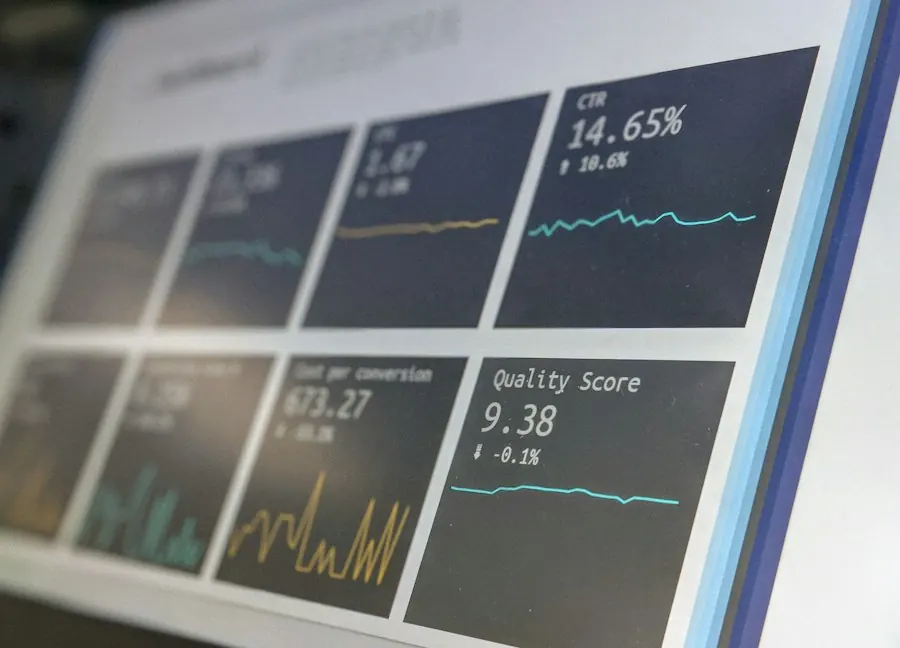
Anonymised figures from your own operations, a customer survey or a public-data analysis, published as a dated report with clear methodology. AI engines love a number with a named owner — and so do journalists, which compounds into earned mentions.
Calculators & tools
Cost estimators, ROI calculators and sizing tools — paired with a text explanation of the formula and typical ranges, so the logic is readable by crawlers, not locked inside a widget.

Glossaries & definitions
One crisp, sourced definition per term on its own anchored section, with DefinedTerm markup where appropriate. "What is X?" is one of the most common question shapes in AI search.
Comparison tables
Honest "X vs Y" and "best for" matrices with criteria, prices and dates. Engines lean heavily on structured comparisons when users ask them to choose.
Checklists & templates
Step-by-step processes and downloadable templates that answer "how do I…" questions completely, with the steps in the HTML.
Statistics hubs
A curated, sourced and regularly updated page of facts for your industry — the format behind our own GEO statistics page.
Signals that decide whose passage wins.
When several pages say the same thing, engines pick the one that looks most current, most accountable and easiest to parse. These are the levers we pull.
| Signal | Why it influences citations | What we implement |
|---|---|---|
| Author E-E-A-T | Google's guidance stresses experience, expertise, authoritativeness and trust; named experts make claims attributable. | Real author bylines, bio pages with credentials, Person schema, expert review on YMYL topics. |
| Freshness | Ahrefs found AI assistants cite content 25.7% fresher than organic results, with ChatGPT showing the strongest preference. | Visible "last reviewed" dates, a quarterly refresh calendar for money pages, dated statistics. |
| Structured data | Schema clarifies entities, authors and page type. Google requires it to match visible text. | Organization, Article, Person, Product, FAQPage, HowTo and DefinedTerm where they genuinely fit. |
| Outbound sourcing | Citing primary sources was one of the stronger methods in the GEO paper and builds reader trust. | Link primary data, standards bodies and studies — not other blogs repeating them. |
| Crawl & render access | An engine can't quote what its crawler can't fetch or render. | Robots.txt for OAI-SearchBot, PerplexityBot, Bingbot and Googlebot; server-side rendering; snippet controls review. |
| Index presence | Google says pages must be indexed and snippet-eligible to appear in AI Overviews; Copilot draws on Bing. | Search Console and Bing Webmaster Tools hygiene, IndexNow, clean canonicals and sitemaps. |
| Consistency | Conflicting numbers across your own pages make every version less quotable. | One source of truth for prices, specs and facts, propagated site-wide. |
Sources: Google Search Central, AI features and your website · Ahrefs, 2025 (16.9M citations analysed) · OpenAI crawler docs
What Google actually says
"There are no additional requirements to appear in AI Overviews or AI Mode, nor other special optimizations necessary." Translation: there's no secret AI tag. Citation optimization is excellent SEO done at passage level — which is exactly why it also lifts your classic rankings.
What we never do
No hidden text aimed at language models, no prompt-injection, no fabricated statistics or invented "experts". Engines are getting better at filtering manipulation, and one exposed fake number can undo years of credibility.
From "who gets cited?" to "we get cited."
Every engagement starts with evidence: the actual sources AI engines use for your questions today. Then we close the gap page by page.
Question set & baseline
We agree 50–150 priority questions with you — the ones tied to revenue — and run them across ChatGPT search, Perplexity, Gemini, Copilot and Google AI Overviews/AI Mode, recording every cited URL.
Source gap analysis
For each question: who's cited, which passage was lifted, and why it won (specificity, format, freshness, authority). We map your closest page to each one — or flag that you have none.
Technical & entity checks
Crawler access, rendering, indexation in Google and Bing, schema validity, author markup and internal linking to priority pages.
Prioritised roadmap
A ranked list of rewrites, new pages and citable assets, scored by business value and effort — with one fully rewritten page as a worked example.
Rewrite money pages
Chunk-level restructuring of your highest-value pages: question headings, answer-first openings, tables, quotations, sources, review dates.
Build citable assets
One flagship asset per quarter — a benchmark, calculator or statistics hub — plus supporting glossary and comparison content.
Promote to cited sources
Digital PR to get your data referenced by publications engines already trust, closing the loop with off-site authority.
Re-test & iterate
Monthly re-runs of the question set with AI visibility tracking, so we double down on formats that win citations in your niche.
Same principles, different citation mechanics.
Each engine retrieves and displays sources in its own way. Our rewrites follow the shared principles above; our technical work and testing follow the details below.
Perplexity
Every answer shows numbered sources, so citation share is highly visible. PerplexityBot indexes pages and respects robots.txt; Perplexity-User fetches pages live when someone asks. Freshness and precise, scannable passages matter a lot here. More in Perplexity SEO.
ChatGPT search
OpenAI states that sites opted out of OAI-SearchBot won't be shown in ChatGPT search answers. Cited links carry utm_source=chatgpt.com, so you can see the visits citations send in your analytics.
Google AI Overviews & AI Mode
Pages must be indexed and eligible for a snippet. Query fan-out means one prompt can pull from pages ranking for many sub-questions — which rewards deep topic coverage, not one long page.
Microsoft Copilot
Grounded in Bing. Since February 2026, Bing Webmaster Tools' AI Performance report (public preview) shows how often your pages are cited in Copilot and Bing's AI summaries, and which grounding queries triggered them. See Copilot SEO.
Gemini
Draws on Google's search infrastructure when it grounds answers on the web, so the same Google indexation, structured data and E-E-A-T work carries over. See Gemini SEO.
What we test per engine
Passage length, table vs. prose, position of the answer, quote placement and refresh timing. Results feed directly into your next batch of rewrites.
Sources: Perplexity crawler docs · OpenAI Publishers & Developers FAQ · Bing Webmaster Blog, Feb 2026
What's included in AI citation optimization.
Citation audit report — every source cited for your priority questions, by engine, with gap scoring.
Chunk-level rewrites of priority pages, with before/after diffs your team can approve.
Citable asset — research, benchmark, calculator or stats hub — designed, written and promoted.
Schema & author system — validated markup, bylines, bio pages and review dates.
Also in every engagement
- Content style guide for "citable writing" your in-house writers can follow
- Crawler and rendering fixes, with a robots.txt change log
- Freshness calendar for money pages and statistics
- Monthly citation-share report across five AI engines
- A named GEO lead and a monthly 30-minute review call
Works best alongside
ChatGPT SEO, Perplexity SEO and Google AI Overviews optimization for engine-specific work, and brand-mention building for the off-site signals that make engines trust you in the first place.
Scope my engagement
Content that earns links from people and machines.
We've built content that ranks and earns links since 2008. AI citation is the same craft with a sharper edge: every paragraph has to stand on its own.
- Subject-matter interviews, not rewrites of rewrites. We extract first-hand experience and data from your team — the raw material models can't find elsewhere.
- Technical and editorial in one team. Our developers fix rendering and schema while our writers fix the words, so nothing gets lost in hand-offs.
- Digital PR built in. We take your citable assets to journalists and industry sites, multiplying the sources that point to you.
- Measured, not guessed. Citation share is tracked per question and engine — and we share what we learn in our GEO case studies.
AI citation optimization, answered.
What is AI citation optimization?
AI citation optimization is the practice of structuring and strengthening your content so that AI answer engines — ChatGPT search, Perplexity, Gemini, Microsoft Copilot and Google AI Overviews/AI Mode — select your pages as the sources they quote and link. It works at the passage level: answer-first writing, self-contained chunks, original data, expert quotations, sourcing, schema and freshness.
What's the difference between a brand mention and a citation?
A mention is when an AI answer names your brand. A citation is when it links to your URL as a source for a statement. Mentions shape perception; citations deliver attribution and clicks. Most brands need both, which is why we pair citation work with brand-mention building.
Does the GEO research really show a 40% improvement?
The KDD 2024 paper by Aggarwal et al. reports visibility gains of up to 40% on its benchmark and up to 37% in a test on Perplexity.ai, with quotation addition, statistics addition and citing sources among the most effective methods. It's a controlled study on earlier engines, and results varied by topic, so we use it as directional evidence and measure real-world impact on your own question set.
How long until my pages start getting cited?
Engines that search the web live — Perplexity, ChatGPT search, Copilot and Google's AI features — can pick up a well-structured, indexed page within weeks of it being crawled. Original assets that need to earn references from other sites take longer, typically a few months.
Do I need special schema or an llms.txt file to be cited?
Google states there are no special requirements or AI-specific markup needed for AI Overviews or AI Mode. Schema still helps by clarifying entities, authors and page types, as long as it matches visible content. An llms.txt file is optional and not an officially supported standard for the major engines, so we treat it as a low-priority extra.
Will rewriting pages for AI hurt my Google rankings?
No. Answer-first structure, clearer headings, original data, named experts and better sourcing are all aligned with Google's helpful-content and E-E-A-T guidance. In practice, citation work usually improves featured snippets and classic rankings too.
Can you make AI engines cite a specific page?
No one can force a citation — engines choose sources per query and answers vary between runs. What we can do is make your page the most specific, current, accountable and accessible answer available, then measure how often it's chosen across a fixed set of questions.
We don't have original data. Can we still create citable assets?
Usually yes. Most businesses have more than they think: anonymised order or project data, support-ticket trends, pricing ranges, timelines, or a quick customer survey. Where you truly have nothing, we can build a sourced analysis of public datasets or a well-maintained statistics hub.
How do you measure citation success?
We track citation share — the percentage of answers for your question set that link to your domain — per engine and per page, alongside mentions, referral traffic from AI platforms in GA4, and Google's and Bing's AI performance reports where available. You see the trend monthly against competitors.
Keep exploring generative engine optimization
Every AI platform rewards slightly different signals. Dive into the playbook for each one — or let our GEO team run all of them for you.
Find out what ChatGPT, Gemini & Google AI say about you today.
Tell us your website and top competitors. Within 3 business days a GEO strategist sends you a personal AI visibility report — no generic PDF, no sales script.
- Share-of-voice snapshot across ChatGPT, Gemini, Perplexity, Copilot and Google AI Overviews
- Prompt-level gaps where competitors are named and you aren't
- Citation sources each AI engine leans on in your category
- A prioritised 90-day GEO plan you can run in-house or with us