Get your brand cited where work happens — inside Microsoft Copilot.
Copilot sits in Windows, Edge, Bing and the Microsoft 365 apps your buyers use all day. When it needs facts from the web, it asks Bing. Our Microsoft Copilot SEO service makes sure Bing has your pages, understands your brand and hands them to Copilot as cited sources.
Copilot seats (Apr 2026)
across 98+ industries
on DesignRush

Four places Copilot can recommend you.
"Copilot" is a brand covering several products. They look different, but when they reach for public web information they share one backbone — Bing — so one well-built strategy covers them all.
Copilot app
The consumer assistant on web, mobile and Windows. People ask it for advice, comparisons and product picks — and it answers with linked sources.
Bing & Copilot Search
AI-generated summaries inside Bing results, plus Copilot Search (launched April 2025), which blends generative answers with inline, clickable citations.
Copilot in Edge & Windows
Copilot Mode in Edge can reason across open tabs and, in limited preview, take actions for users. Your site may be read by an assistant before a human sees it.
Microsoft 365 Copilot
Copilot inside Word, Outlook, Teams and Copilot Chat at work. With web grounding on, it sends short Bing queries — so vendor research at work can surface you.
Why Copilot is so easy to overlook
Most marketing teams judge search by Google Search Console, and Bing traffic looks small next to it. But Copilot answers rarely look like "Bing traffic". A buyer reads a cited summary inside Teams or Word, forms a shortlist and visits your site days later via a direct or branded search. The influence is real; it just doesn't show up under the channel name you expect. That's why we measure citations and mentions directly instead of relying on referral sessions alone.
Why the work is unusually efficient
Microsoft has published more about how Copilot grounds its answers than most AI platforms: it uses Bing, it sends short generated queries, it shows citations, and Bing Webmaster Tools now reports which pages get cited. Fewer unknowns means less guesswork. Fix Bing indexing, write pages that answer short grounding queries plainly, and you can watch citation counts respond in Microsoft's own data.
Sources: Bing Search Blog, Apr 2025; Microsoft Edge Blog, Oct 2025; Microsoft Learn — Copilot web search.
Copilot asks Bing. Bing has to know you.
Microsoft is unusually explicit about this. Its documentation describes Copilot Chat as "a generative AI service grounded in data from the public web from the Bing search service."
For Microsoft 365 Copilot, Microsoft explains that Copilot parses the prompt, identifies where web information would help and "generates a search query that it sends to the Bing search service" — a few words informed by the prompt, not the full prompt and not the user's files. The results are used to compose the answer, and web citations show the exact queries sent to Bing.
- Not in Bing's index? You can't be a grounding source.
- Indexed but unclear? Bing may pass over you for a page that states the fact plainly.
- Short queries matter. Grounding queries are terse, so pages focused on one clear topic match better.
Sources: Microsoft Learn — Copilot Chat privacy; Microsoft Learn — web search in Microsoft 365 Copilot.
1. yourbrand — native Dynamics 365 connector and multi-warehouse support1.
2. Competitor A — strong in cold-chain2.
3. Competitor B — lower cost, API-only integration3.
Searched Bing: "warehouse management software Dynamics 365 integration"
Illustrative example. The short "Searched Bing" query is the one your page needs to win.
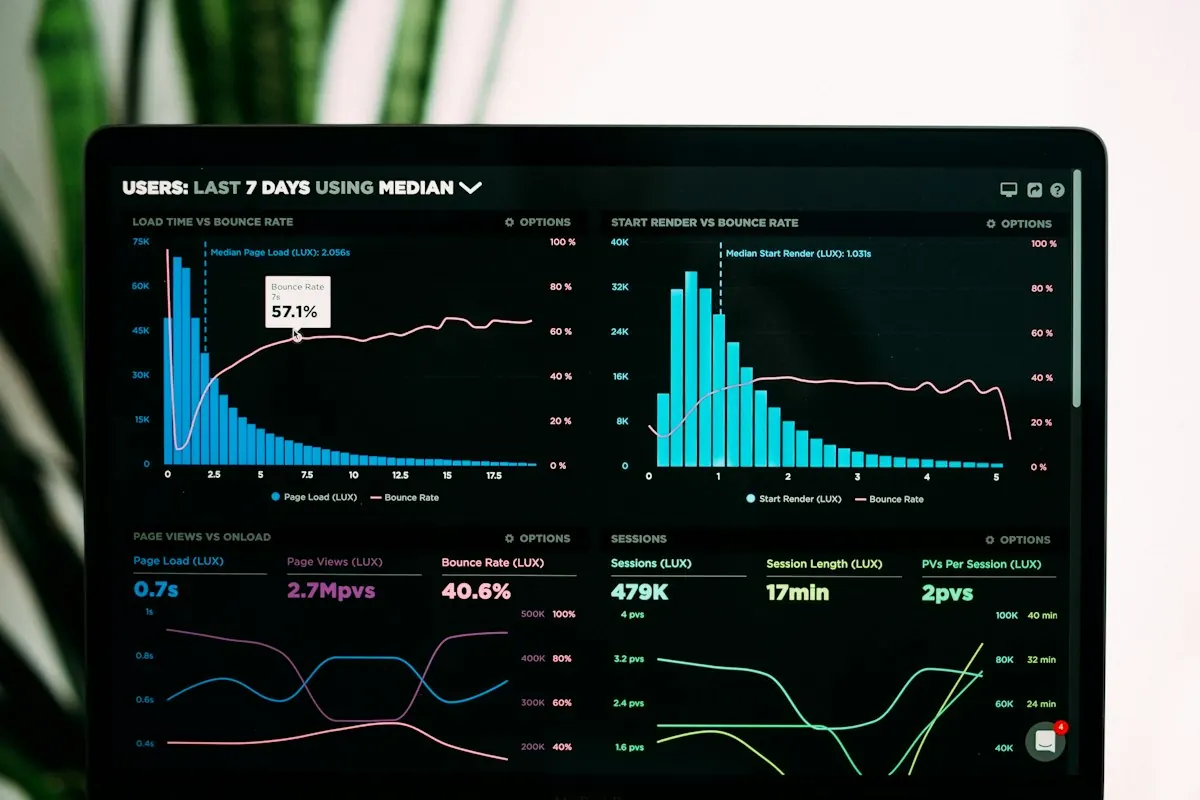
The first AI citation report from the platform itself.
In February 2026 Microsoft introduced AI Performance in Bing Webmaster Tools as a public preview, covering Microsoft Copilot, AI-generated summaries in Bing and select partner integrations. It's Microsoft's own description of "an early step toward Generative Engine Optimization (GEO) tooling."
Total citations
How many times your content was shown as a source in AI answers.
Average cited pages
Unique pages from your site shown as sources per day.
Grounding queries
The phrases the AI used when it retrieved your content — a new kind of keyword research.
Page-level trends
Which URLs earn citations, and how that changes over time.
We set this up on day one, export it alongside our own AI visibility tracking, and use grounding queries to decide which pages to build next. Features in preview can change — we'll adapt reporting as Microsoft updates it.
Source: Bing Webmaster Blog, Feb 2026
Is Copilot citing you — or your competitors?
We'll check your Bing indexation, set up AI Performance, run your buyer questions through Copilot and show you the gap. Free, no obligation.
The Bing plumbing most SEO plans forget.
Many sites are tuned for Google and simply assume Bing will follow. For Copilot, that assumption is expensive. These are the checks we run first.
Bingbot access
robots.txt, firewall and CDN rules that challenge or rate-limit Bingbot; server errors and redirect chains in Bing's crawl data. If Bingbot can't fetch it, Copilot can't cite it.
IndexNow
An open protocol that pings participating engines the moment a URL is added, updated or deleted. Per IndexNow, a submission to one endpoint is shared with all participants — Bing included. Essential for prices, stock and news.
Bing Webmaster Tools
Verified property, sitemaps submitted, URL inspection, crawl-control settings and site scan issues fixed — plus AI Performance reporting switched on.
Rendering
Key facts — pricing, specs, locations — present in server-rendered HTML rather than injected late by JavaScript.
Schema markup
Organization, Product, Service, FAQ, Article and LocalBusiness markup. Bing's Fabrice Canel has said schema helps Microsoft's LLMs understand content.
Meta directives
An audit for stray noarchive or nocache tags that limit or remove your pages from Copilot answers (details below).
Sources: IndexNow FAQ; Search Engine Roundtable, 2025.
One meta tag can remove you from Copilot.
Bing gives site owners specific controls over AI use of their content. They're useful — and occasionally set by accident by a plugin, CMS template or legal request.
| Directive | Effect on Bing search | Effect on Copilot / AI answers | Our recommendation |
|---|---|---|---|
| (none) | Normal | Eligible to be used and cited | Default for money pages |
| nocache | Normal | Eligible, but limited to URL, title and snippet in answers | Rarely needed; review case by case |
| noarchive | Normal | Not used in Copilot responses or grounding | Remove unless there's a legal reason |
| Disallow: / for Bingbot | Not crawled | Not available for grounding | Never, if you want AI visibility |
Sources: Bing Webmaster Blog, 2023; Bing's February 2026 guidelines update, as reported by Search Engine Journal: "NOARCHIVE prevents content from being used in Copilot responses and grounding results."
What Bing's guidelines now say about GEO
Bing's February 2026 update describes GEO as "focused on content eligibility for grounding and reference in AI responses," and recommends stating facts directly, using consistent entity names, keeping each URL on a single topic and putting essential information prominently. That's the playbook we build pages to. See the Bing Webmaster Guidelines.
What it now explicitly forbids
The same update added "Prompt Injection and AI Manipulation" as a named abuse category, covering attempts to interfere with language models used by Bing or Copilot. Hidden instructions for AI crawlers aren't a growth hack — they're a policy violation. We don't use them.
Your buyers are already in Microsoft's world.
For B2B brands, Copilot is arguably the most important AI engine you're not optimising for. It's built into the productivity tools procurement teams, IT leaders and operations managers use every day.
When a buyer asks Copilot in Teams or Word to "summarise the leading vendors for…", the answer can be grounded in Bing results. That turns vendor research into a GEO problem — and it rewards the things B2B brands should be doing anyway:
- Integration and compatibility pages. "Works with Dynamics 365 / SharePoint / Azure" pages answer exactly the queries Microsoft-centric buyers ask.
- Spec-rich solution pages. Certifications, deployment options, SLAs, pricing models — stated plainly, one topic per URL.
- Analyst-style content. Comparison guides, buyer checklists and RFP templates that Copilot can lift into a draft.
- Consistent entity data. The same company name, description, leadership and locations everywhere Bing looks.

Make Microsoft's ecosystem agree about you.
Copilot is more confident recommending brands that are described consistently across the web. Microsoft-owned properties are a sensible place to start.
LinkedIn company & people
LinkedIn has been part of Microsoft since 2016 and its public pages are widely indexed. A complete company page, consistent descriptions, active leaders and thought-leadership articles reinforce who you are and what you're expert in. We treat it as a core entity profile — not just a social channel.

Structured entity data
Organization schema with sameAs links, Wikidata where you qualify, Bing Places for local businesses, and consistent NAP data. One source of truth, mirrored everywhere, so Bing never sees conflicting facts.

Third-party authority
Trade journals, review platforms, partner directories and analyst mentions that Bing ranks for your category. Our brand mention and digital PR work targets the sources Copilot already cites.
Five prompts to test your Copilot visibility today.
Run these in the Copilot app and in Bing. Note whether you're named, which URLs are cited and how you're described. Then compare with a competitor.
If the brand-facts answer is wrong or vague, that's an entity problem. If you're missing from shortlists, it's usually content and authority. If nothing of yours is ever cited, start with Bing indexing. More test prompts live in our AI search prompt library.
A 90-day Copilot launch plan.
Bing-first technical work up front, then content and authority on a monthly cycle — measured with Microsoft's own citation data and our prompt tracking.
Audit & instrumentation
Verify Bing Webmaster Tools, switch on AI Performance, crawl your site as Bingbot, and run 50–200 buyer prompts across the Copilot app and Bing. Benchmark 3–5 competitors.
Fix the plumbing
Unblock Bingbot, implement IndexNow, clean sitemaps and canonicals, remove stray noarchive tags, and ship Organization and Product/Service schema.
Build for grounding queries
Use grounding queries and prompt gaps to create or rewrite answer-first pages — integration pages, comparisons, pricing explainers and FAQs.
Entity & authority
LinkedIn and profile alignment, Bing Places, digital PR on cited sources, and expert content from your leadership team.
Measure & iterate
Citation trends from AI Performance, prompt-level share of voice from our tracking, and referral traffic from Copilot and Bing — then double down on what moves.
Deliverables
- Copilot & Bing visibility audit with competitor benchmark
- Bing Webmaster Tools setup and AI Performance reporting
- IndexNow implementation (CMS plugin, CDN or API)
- Bingbot crawl and meta-directive fix list
- Schema and entity alignment across site, LinkedIn and profiles
- Answer-first pages targeting grounding queries
- Digital PR on sources Copilot cites in your category
- Monthly report and a 30-minute call with your GEO lead
Common mistakes we fix
- Bing Webmaster Tools never verified — or verified and ignored
- Firewall "bot protection" silently challenging Bingbot
- Key facts only visible after JavaScript runs
- noarchive added site-wide by a plugin or template
- Different company descriptions on site, LinkedIn and directories
- One mega-page trying to answer twenty questions
Copilot SEO earns its keep when buyers live in Microsoft 365.
Every brand benefits from Bing visibility. These four groups benefit most, because their customers research inside Microsoft's tools.
B2B SaaS & IT
Software, cloud and managed-service providers — especially those that integrate with Microsoft products and sell to IT teams.
Manufacturing & industrial
Suppliers chosen through spec sheets, certifications and RFPs drafted by procurement teams working in Word and Excel.
Professional services
Consulting, legal, finance, HR and recruitment firms evaluated by executives who ask Copilot for summaries and shortlists.
Local & multi-location
Clinics, dealers, installers and branch networks whose customers ask Bing and Copilot "near me" and service-area questions. Bing Places listings and consistent location data matter here.

Bing SEO veterans, built for AI search.
We've been doing search since 2008 — including the Bing work most agencies treat as an afterthought. Copilot made that work matter a lot more.
- Technical depth. Crawl, rendering, IndexNow and schema implemented by our own developers on WordPress, Shopify, Webflow and custom stacks.
- B2B fluency. We know how procurement-led buyers research — and how to build integration, comparison and spec pages that answer them.
- Evidence-led. We test what changes AI citations and share it in our experiments and case studies.
- Multi-engine. Strong Bing presence also supports other assistants; your plan covers ChatGPT, Perplexity, Gemini and Google AI Overviews too.
Microsoft Copilot SEO questions, answered.
What is Microsoft Copilot SEO?
Microsoft Copilot SEO is the work of getting your brand mentioned and your pages cited when Copilot answers questions — in the Copilot app, Bing, Copilot in Edge and Windows, and Microsoft 365 Copilot. Because Copilot grounds web answers in Bing, it combines Bing technical SEO, answer-first content, schema and entity consistency, and third-party authority.
Does Copilot use Bing or Google?
Bing. Microsoft's documentation describes Copilot Chat as grounded in data from the public web from the Bing search service, and explains that Microsoft 365 Copilot sends generated search queries to Bing when web search is enabled. Strong Google rankings don't guarantee Bing visibility, so we always check Bing directly.
Can I see how often Copilot cites my website?
Yes, to a degree. Since February 2026, Bing Webmaster Tools has offered AI Performance (introduced as a public preview), which reports citations, cited pages and grounding queries across Microsoft Copilot, Bing AI summaries and select partners. We combine it with our own prompt tracking to see mentions and competitor share as well.
What is IndexNow and do I need it?
IndexNow is an open protocol that tells participating search engines, including Bing, when URLs are added, updated or deleted. A submission to one endpoint is shared with all participants. It helps Bing — and therefore Copilot — see fresh prices, products and content faster. Most CMSs and CDNs can enable it with little effort.
Can Microsoft 365 Copilot recommend my company to business users?
When web search is enabled by the organisation, Microsoft 365 Copilot can ground responses in Bing results and show the sources. That means business users researching vendors at work can see your pages cited. Admins can turn web search off, so this channel varies by organisation.
Does LinkedIn affect Copilot visibility?
Microsoft doesn't publish a formula, so we don't claim a direct ranking effect. LinkedIn is Microsoft-owned and its public pages are widely indexed, which makes it an important place to state who you are consistently. A complete company page and active, expert leaders reinforce your entity across the web Copilot draws on.
Should I use noarchive or nocache tags?
Only deliberately. Per Bing, noarchive prevents content from being used in Copilot responses and grounding, while nocache limits AI answers to the URL, title and snippet. Both leave normal Bing search unaffected. If you want Copilot citations, remove them from pages you want cited.
How long does Copilot SEO take to show results?
Technical fixes such as unblocking Bingbot and adding IndexNow can show up in Bing within weeks. Content built for grounding queries typically takes one to three months to earn regular citations, and authority and entity work compounds over several months.
Is Copilot SEO different from ChatGPT or Perplexity SEO?
The foundations are shared: crawl access, clear entities, answer-first content and third-party authority. The difference is the retrieval layer. Copilot is explicitly grounded in Bing, so Bing indexing, IndexNow and Bing Webmaster Tools carry more weight, and Microsoft's AI Performance report gives you first-party citation data. Most clients run Copilot alongside ChatGPT SEO and Perplexity SEO in one plan.
How much do Microsoft Copilot SEO services cost?
It depends on your site's technical state, your category and how much content and PR is needed. After the free audit we propose a fixed monthly scope, or a one-off Bing and Copilot audit with a roadmap your own team can implement.
Keep exploring generative engine optimization
Every AI platform rewards slightly different signals. Dive into the playbook for each one — or let our GEO team run all of them for you.
Find out what ChatGPT, Gemini & Google AI say about you today.
Tell us your website and top competitors. Within 3 business days a GEO strategist sends you a personal AI visibility report — no generic PDF, no sales script.
- Share-of-voice snapshot across ChatGPT, Gemini, Perplexity, Copilot and Google AI Overviews
- Prompt-level gaps where competitors are named and you aren't
- Citation sources each AI engine leans on in your category
- A prioritised 90-day GEO plan you can run in-house or with us